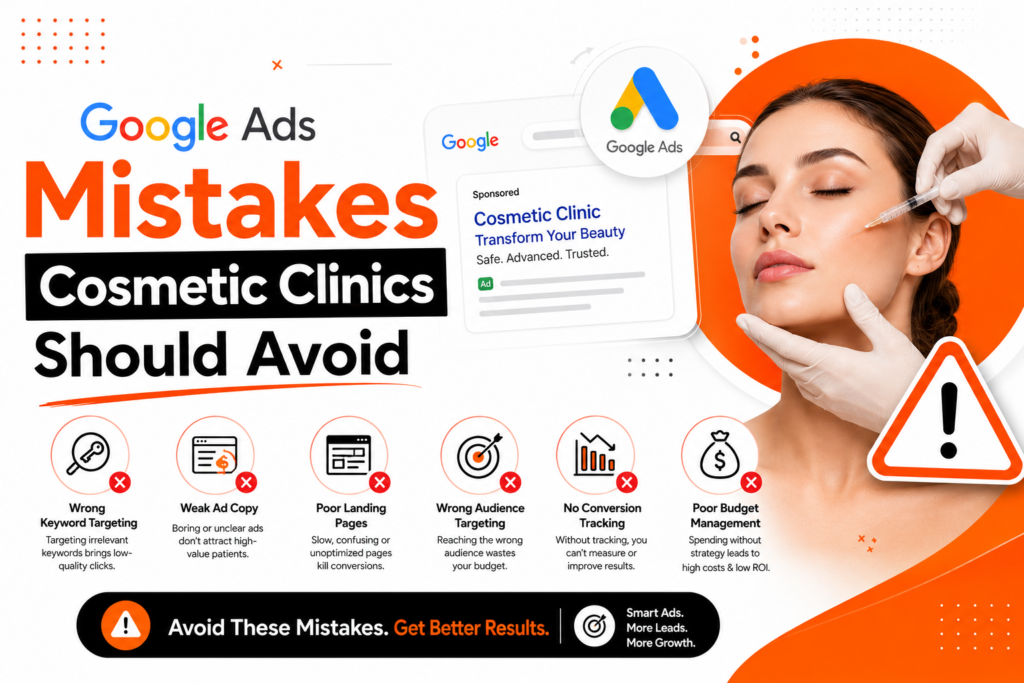
Many cosmetic clinics invest in Google Ads hoping to get more appointments and premium clients. However, not every campaign delivers good results. Some clinics spend large amounts on ads but still receive low-quality leads or very few bookings.
The problem is often not the treatment or service quality. In many cases, clinics make simple advertising mistakes that reduce visibility, waste budget, and push potential patients toward competitors.
Understanding these mistakes can help cosmetic clinics improve campaign performance and attract better patients consistently.
Targeting the Wrong Audience
One of the most common mistakes is targeting a very broad audience. Some clinics try to reach everyone instead of focusing on people who are genuinely interested in cosmetic treatments.
Google Ads work best when campaigns target:
- Specific treatment searches
- Local users
- High-intent keywords
- Relevant age groups
- People searching for premium services
Broad targeting usually increases ad costs while reducing appointment quality.
Ignoring Local Search Intent
Most cosmetic treatment searches are location-based. People usually search for clinics near their area because they prefer nearby consultations and treatments.
If clinics fail to target local areas properly, ads may appear to users outside the service region. This wastes advertising budget and lowers conversion rates.
Using location-focused campaigns helps cosmetic clinics appear in front of users who are more likely to book appointments.
Weak Landing Pages
A strong ad cannot perform well if the website experience is poor. Many clinics send users to pages that look outdated, slow, or confusing.
When visitors cannot quickly understand:
- Treatments offered
- Pricing details
- Consultation process
- Clinic credibility
- Contact information
they often leave the website without taking action.
A professional landing page with clear messaging and simple booking options improves trust and increases conversions.
Using Generic Ad Copy
Many cosmetic clinics use ad text that sounds too basic or similar to competitors. Generic ads fail to create interest or trust.
Effective Google Ads should clearly explain:
- What treatments are offered
- Why the clinic stands out
- What patients can expect
- How users can book consultations
Strong headlines and clear benefits help attract more qualified leads.
Not Tracking Conversion Data
Some clinics run Google Ads without tracking calls, appointment forms, or consultation bookings. Without proper tracking, it becomes difficult to understand which campaigns are generating real results.
Tracking helps clinics:
- Identify high-performing keywords
- Reduce wasted spending
- Improve targeting
- Increase booking quality
- Optimize campaigns regularly
Without data, advertising decisions become guesswork.
Ignoring Mobile Users
Most people search for cosmetic treatments using mobile devices. If the website is difficult to use on mobile, users may leave immediately.
Common mobile issues include:
- Slow loading speed
- Small text
- Poor layout
- Difficult forms
- Broken buttons
A mobile-friendly experience improves engagement and helps clinics convert more visitors into patients.
Focusing Only on Clicks
Some cosmetic clinics judge campaign success only by the number of clicks. However, clicks alone do not guarantee quality patients.
The real focus should be on:
- Consultation bookings
- Premium treatment inquiries
- Lead quality
- Patient conversions
- Return on advertising spend
A campaign with fewer but better-quality leads is often more valuable than one with many low-quality clicks.
Poor Budget Management
Running ads without proper budget planning can quickly increase costs. Some clinics spend heavily on keywords that do not convert into appointments.
Successful campaigns usually focus on:
- High-intent keywords
- Local targeting
- Treatment-specific ads
- Conversion optimization
- Regular performance monitoring
Smart budget management helps clinics improve results while controlling costs.
Conclusion
Google Ads can help cosmetic clinics attract better patients and increase appointment bookings when campaigns are managed properly. However, common mistakes like poor targeting, weak landing pages, generic ads, and lack of tracking can reduce performance significantly.
Clinics that focus on user experience, trust, local visibility, and proper campaign optimization often see better long-term results and stronger patient growth.
Summary
Many cosmetic clinics lose potential patients because of avoidable Google Ads mistakes. Problems like weak targeting, poor mobile experience, generic ad copy, and lack of tracking reduce campaign effectiveness. By improving ad strategy, landing pages, and local visibility, clinics can attract higher-quality leads and increase consultation bookings consistently.